



A Practical Buyer Guide for Reliable Deep Drawing Press Solutions
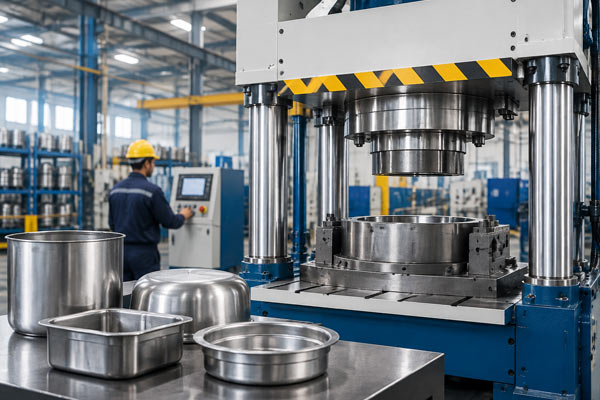
Buying a hydraulic deep drawing press is a long-term production decision. The machine must deliver suitable forming force, control sheet movement and produce consistent components without excessive cracking, tearing or wrinkling. However, machine capacity alone cannot guarantee these results.
A dependable Hydraulic Deep Drawing Press Manufacturer studies the component, material, tooling and production target before recommending a machine. Buyers should therefore compare manufacturers on engineering ability, testing facilities, automation, safety and after-sales support—not merely on the quoted price.
This practical guide explains the factors manufacturers should evaluate before investing in a new deep drawing press.
Start With the Component and Material
Machine selection should begin with the component that will be produced. Share the component drawing, blank dimensions, drawing depth, sheet thickness, material grade and expected daily output with the manufacturer.
Stainless steel, mild steel, aluminium, copper and brass respond differently during forming. Their strength, ductility and surface properties affect the required pressing force, blank-holder pressure and drawing speed.
A responsible manufacturer will study:
- Component shape and dimensions
- Sheet material and thickness
- Drawing depth and draw ratio
- Number of forming stages
- Surface-finish expectations
- Daily or monthly production volume
Ask for a Material and Tooling Trial
A trial with actual production material is one of the best ways to evaluate a machine solution. It can reveal problems that may not appear in a general quotation, including inconsistent material flow, poor surface finish, excessive thinning and difficult component ejection.
Where possible, request a trial using:
- The intended sheet material
- Actual or representative tooling
- The planned lubrication method
- Required component dimensions
- Expected cycle conditions
The trial results can help both parties confirm press settings, component quality and production feasibility before final approval.
Check Press Capacity and Working Dimensions
Press tonnage is important, but it is only one part of machine selection. The bed size, stroke length, daylight gap, die cushion and operating speed must also match the application.
Presstech offers hydraulic deep drawing press configurations from approximately 50 tons to more than 1000 tons, depending on the production requirement. Available specifications can include bed sizes from 600 × 600 mm to 2000 × 2000 mm and stroke lengths from 300 mm to 1000 mm.
These figures are configuration ranges, not a universal recommendation. The correct capacity should be calculated from the actual material, blank size, component geometry and tooling.
Evaluate Blank Holder and Die Cushion Control
The sheet edge can move unevenly when the punch pulls material into the die. Too little holding pressure may cause wrinkles, while excessive pressure may restrict material flow and lead to tearing.
A controlled blank holder or die cushion helps manage this movement. Ask whether its pressure and stroke can be adjusted according to the component and material. Independent control becomes especially valuable when the factory produces several parts on one press.
The manufacturer should clearly explain how the proposed system will control sheet flow during each stage of drawing.
Review Controls and Production Automation
Modern buyers increasingly require recipe-based controls, production monitoring and repeatable settings. A PLC and HMI can allow operators to save pressure, speed, stroke and dwell-time parameters for different components.
Useful automation options may include:
- Programmable pressure and stroke settings
- Multiple operating recipes
- Automatic loading and unloading
- Component ejection systems
- Fault messages and production counters
- Sensors for process monitoring
Automation should support the required output and quality level. A simple production job may not need a highly complex system, while high-volume manufacturing may benefit from material handling and automatic component transfer.
Verify Machine Structure and Safety
Deep drawing places heavy and repeated loads on the frame. The machine structure should maintain alignment between the ram, punch, die and bed throughout operation. Ask the manufacturer how the frame is designed, fabricated and inspected.
Safety should also be discussed during the quotation stage. Depending on the machine and application, protective arrangements may include two-hand operation, emergency stop buttons, guards, interlocks, light curtains and pressure protection.
The final safety configuration should match the operating method, tooling and applicable factory requirements.
Compare Energy Use and Maintenance Access
Purchase price does not represent the complete cost of a press. Power consumption, oil condition, seal replacement, filter maintenance and production downtime also affect long-term operating expenses.
Ask about motor capacity, hydraulic circuit design, oil cooling, filtration and access to service points. Clearly labelled components and accessible maintenance areas make routine inspection easier.
Buyers should also confirm whether commonly required hydraulic and electrical parts are readily available. This can reduce delays when replacements are needed.
Examine Installation and After Sales Support
A reliable manufacturer should support the machine beyond dispatch. Confirm what is included in installation, commissioning, operator training and maintenance guidance.
Before placing the order, ask for written details covering:
- Installation responsibilities
- Foundation and electrical requirements
- Trial and acceptance procedure
- Operator and maintenance training
- Warranty coverage
- Spare-parts availability
- Remote and on-site technical support
Presstech Machine India Pvt Ltd is based in Ahmedabad, Gujarat, and provides customised hydraulic press solutions for industrial sheet-metal forming applications.
Conclusion
Selecting a Hydraulic Deep Drawing Press Manufacturer requires more than comparing tonnage and price. The right supplier should understand the component, calculate the required capacity, support tooling trials and recommend suitable controls, safety systems and automation.
Share your component drawing, material grade, thickness, blank size, drawing depth and required output with Presstech Machine India Pvt Ltd. This information will help the engineering team recommend an appropriate hydraulic deep drawing press configuration for your production needs.
Frequently Asked Questions
Share the component drawing, sheet material, thickness, blank dimensions, drawing depth, production volume, tooling details and automation requirements. These details allow the manufacturer to prepare a more accurate technical proposal.
Required tonnage depends on material strength, sheet thickness, component size, drawing depth, die design and blank-holder force. The manufacturer should calculate it from the actual application rather than selecting it through a general estimate.
Yes. One press can produce different components when its bed size, capacity, stroke and controls support the required tooling. Recipe-based settings can make product changeovers more consistent.
A die cushion applies controlled force to the sheet during forming. It helps regulate material flow and can reduce wrinkles, tearing and uneven component formation.
A trial is recommended for technically demanding or high-volume parts. Testing the intended material and tooling helps validate forming quality, settings and production feasibility.
Automatic feeding, component transfer, ejection, recipe controls, process sensors and production counters can improve output and repeatability. The exact system should be selected according to the production process.
Evaluate the supplier’s application knowledge, engineering calculations, trial support, structural quality, control system, safety planning, warranty and service capability. Select a manufacturer that provides a complete technical proposal instead of only a machine price.