

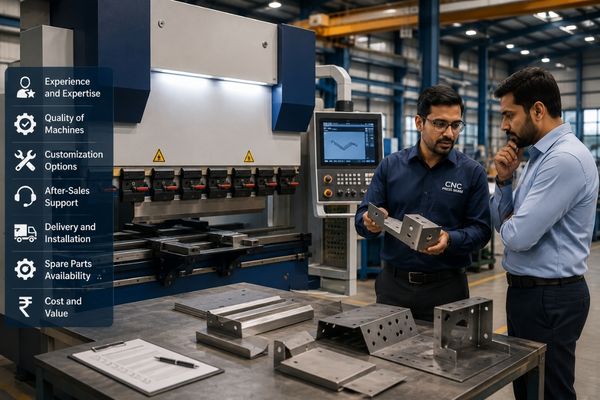
How to Choose a CNC Press Brake Machine Supplier for Better Production
Modern sheet metal fabrication depends on speed, accuracy, repeatability, and controlled production. Whether a company manufactures electrical panels, machine enclosures, automobile components, industrial cabinets, furniture parts, or custom metal products, bending quality directly affects the final product. This makes choosing the right CNC Press Brake Machine Supplier an important business decision rather than simply a machinery purchase.
A reliable CNC press brake can help manufacturers produce accurate bends with less manual adjustment and fewer rejected components. However, machine performance also depends on proper capacity selection, CNC controls, tooling, operator support, installation, and after-sales service. Buyers should therefore evaluate the supplier carefully before placing an order.
What Does a CNC Press Brake Machine Do?
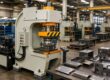
A CNC press brake machine is designed to bend sheet metal into specific angles and shapes with computer-controlled accuracy. The CNC system manages important bending parameters such as ram movement, back gauge positioning, bending depth, angle, and production sequences.
Compared with traditional bending machines, CNC press brakes can reduce operator dependency and improve consistency during repetitive production.
They are commonly used for:
- Electrical control panels
- Sheet metal cabinets
- Automobile components
- HVAC parts
- Industrial enclosures
- Metal doors
- Kitchen equipment
- Machinery covers
- Storage systems
- Custom fabrication components
Businesses handling different sheet sizes and bending designs can particularly benefit from CNC-controlled machines.
Why Choosing the Right CNC Press Brake Machine Supplier Matters
Purchasing a press brake involves more than comparing machine prices. The wrong configuration may reduce productivity or create unnecessary operating costs.
An experienced CNC Press Brake Machine Supplier should first understand the buyer’s application. Important questions include the thickness of the material, maximum bending length, type of metal, required bending accuracy, production quantity, and component complexity.
A suitable supplier can recommend a machine based on these real production requirements instead of simply offering a standard model.
This helps buyers avoid purchasing equipment that is either underpowered or unnecessarily oversized.
Check the Required Bending Capacity
Tonnage is one of the most important factors when choosing a CNC press brake. It determines how much bending force the machine can generate.
Required tonnage depends on several factors, including:
- Sheet thickness
- Sheet material
- Bending length
- Die opening
- Bending method
- Material strength
For example, bending mild steel, stainless steel, and aluminium of the same thickness may require different force calculations.
A professional supplier should help calculate suitable bending capacity before recommending a model.
Consider the Maximum Bending Length
Manufacturers should also check the maximum sheet length they regularly process.
A workshop producing small brackets may require a different press brake compared with a manufacturer producing long electrical panels or structural components.
Selecting the correct working length can improve production flexibility without unnecessarily increasing machine size and investment.
Discuss both present requirements and possible future projects with the supplier before finalising the machine.
Evaluate CNC Controller Features
The CNC controller acts as the operating centre of the press brake.
Modern controllers can help operators program bending sequences, control back gauges, manage multiple axes, save production programs, and reduce setup time.
Depending on the machine configuration, advanced systems may offer:
- Graphical programming
- Automatic bending calculations
- Multi-axis control
- Program storage
- Angle correction
- Tool libraries
- Touchscreen operation
- Production monitoring
The most advanced controller is not always necessary. The best option is one that matches production complexity and operator skill.
Look for Accurate Back Gauge Control
The back gauge determines the positioning of the sheet before bending. Even a powerful machine may produce inconsistent components when material positioning is inaccurate.
A quality CNC press brake should provide smooth and repeatable back gauge movement.
For companies producing components in batches, accurate positioning helps maintain consistent dimensions from the first component to the last.
Ask your CNC Press Brake Machine Supplier about available back gauge axes and positioning accuracy.
Inspect Frame Strength and Machine Construction
A press brake handles significant force during every bending cycle. Strong frame construction is therefore essential for long-term accuracy.
The machine structure should be designed to minimise unwanted deflection during heavy bending operations.
Buyers should review factors such as frame design, machining quality, hydraulic system components, cylinder alignment, guide systems, electrical components, and overall finishing.
Good mechanical construction can support stable production for many years when the machine is maintained properly.
Tooling Is Equally Important
Punches and dies directly affect bending quality.
The correct tooling should be selected according to material thickness, bend radius, angle, component design, and bending method.
Using unsuitable tooling may create marks, poor angles, excessive force, or damaged components.
A knowledgeable supplier should guide buyers in selecting suitable press brake tooling for their regular production work.
Safety Features Should Never Be Ignored
Press brakes involve powerful moving components, so operator safety should be considered from the beginning.
Depending on the machine specification, safety features may include emergency stop controls, light curtains, safety guards, electrical protection systems, foot pedal controls, and laser-based safety devices.
Buyers should discuss applicable safety requirements with the supplier and ensure operators receive proper machine training.
Installation and Operator Training
Even a high-quality machine can perform poorly when installed incorrectly.
Proper machine levelling, electrical connection, hydraulic inspection, controller setup, tooling alignment, and test bending should be completed before regular production begins.
Operator training is equally important.
Training helps the production team understand programming, tool setup, back gauge adjustment, safety procedures, routine maintenance, and basic troubleshooting.
A dependable CNC Press Brake Machine Supplier should clearly explain what installation and training support is included.
After Sales Service Can Protect Production
Machine downtime can affect delivery schedules and customer commitments.
Before purchasing, buyers should understand how the supplier handles technical support, spare parts, preventive maintenance, and troubleshooting.
Important questions include:
- Are spare parts easily available?
- Is remote technical support offered?
- Can technicians visit the site when required?
- Are electrical and hydraulic components commonly available?
- Is preventive maintenance guidance provided?
Reliable service support can significantly improve the long-term value of the machine.
Choosing a CNC Press Brake Machine Supplier in India
India has a growing sheet metal fabrication sector serving automotive, electrical, engineering, infrastructure, HVAC, machinery, furniture, and general manufacturing industries.
Buyers searching for a CNC Press Brake Machine Supplier in India should compare technical capability rather than focusing only on quotation value.
Manufacturers in industrial regions such as Ahmedabad, Rajkot, Pune, Mumbai, Delhi NCR, Chennai, Bengaluru, Hyderabad, and other manufacturing centres often require machines suitable for demanding production environments.
Selecting a supplier that understands local manufacturing requirements, installation conditions, service expectations, and spare-part availability can make machine ownership easier.
Conclusion
A CNC press brake is an important investment for any sheet metal fabrication unit. The correct machine can improve bending accuracy, speed up production, reduce material rejection, and help manufacturers handle more complex components.
Before selecting a CNC Press Brake Machine Supplier, carefully review tonnage, working length, CNC controller, back gauge system, tooling, machine construction, safety features, installation support, training, and after-sales service.
Instead of choosing only on the lowest price, focus on production suitability and long-term operating value. The right machine and supplier combination can support consistent fabrication quality and dependable production for years.
Frequently Asked Questions
Check machine tonnage, bending length, CNC controller, back gauge accuracy, tooling options, safety features, installation support, spare parts, warranty, and after-sales service.
Capacity depends on material type, sheet thickness, bending length, die opening, and required bending method. Your supplier should calculate the required tonnage based on your actual components.
Yes. CNC press brakes can be useful for both small workshops and large production units, especially where accurate and repeatable sheet metal bending is required.
Common materials include mild steel, stainless steel, aluminium, galvanized sheets, and other suitable sheet metals within the machine’s rated capacity.
CNC control improves bending repeatability, simplifies programming, controls machine axes, reduces setup time, and helps operators produce complex components more accurately.
The back gauge positions the sheet before bending. Accurate positioning helps maintain consistent component dimensions during repetitive production.
Yes. Correct punches and dies are essential for achieving the required angle, bend radius, finish, and dimensional accuracy.
Professional installation is recommended because proper levelling, alignment, controller setup, electrical checks, hydraulic inspection, and test bending can directly affect machine performance.
After-sales support is very important because quick technical assistance and spare-part availability can reduce machine downtime and help maintain regular production.
Compare technical specifications, machine construction, controller features, tooling, safety systems, installation, training, warranty, service support, spare-part availability, and total long-term value instead of comparing price alone.