
Laser Cutting Machines in Sheet Metal Manufacturing
In today’s fast-paced manufacturing industry, precision, speed, and versatility are crucial. Laser cutting machines have emerged as one of the most advanced tools in modern workshops, enabling manufacturers to cut, shape, and engrave materials with micron-level accuracy. From automotive components to industrial machinery, these machines are revolutionizing how sheet metal and components are fabricated.
In this blog, we explore how laser cutting machines are transforming manufacturing, their advantages, applications, types, and best practices.
What Are Laser Cutting Machines?
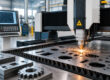
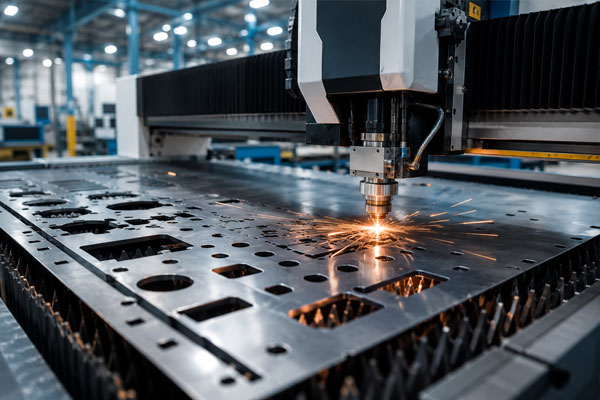
Laser cutting machines are computer-controlled systems that use a high-powered laser beam to cut, engrave, or etch materials. The laser beam melts, burns, or vaporizes the material along a programmed path, producing clean, precise edges without mechanical contact.
Key Components:
- Laser Source: Generates the high-powered beam.
- Cutting Head: Focuses the laser on the material.
- CNC Controller: Directs the laser path according to design files.
- Assist Gas System: Uses oxygen, nitrogen, or CO₂ to remove molten material and improve cut quality.
- Work Table: Holds the material securely during cutting.
Advantages of Laser Cutting Machines
Applications of Laser Cutting Machines
Automotive Industry
- Cutting body panels, engine components, and brackets with high precision.
Aerospace Industry
- Fabricating structural parts, turbine components, and intricate assemblies.
Sheet Metal Fabrication
- Used in industrial enclosures, frames, panels, and architectural components.
Electronics Manufacturing
- Cutting PCBs, metal casings, and heat sinks for electronic devices.
Custom Fabrication and Art
- Creating custom designs, signage, and decorative panels with precise edges.
Types of Laser Cutting Machines
| Type | Features | Typical Applications |
|---|---|---|
| CO₂ Laser Cutting Machines | High power, ideal for non-metallic materials | Wood, plastics and acrylics |
| Fiber Laser Cutting Machines | High precision, fast cutting and energy-efficient operation | Stainless steel, aluminium and thin metals |
| Nd:YAG Laser Machines | Excellent for precision metal engraving and cutting | Jewellery, aerospace and automotive components |
| Hybrid Laser Systems | Combines different laser technologies for versatile cutting | Multi-material fabrication |
How Laser Cutting Machines Work
Design Preparation: CAD software creates the cutting pattern.
Material Placement: Sheet or component is positioned on the work table.
Assist Gas Application: Removes molten material and ensures clean cuts.
Laser Cutting: High-powered laser melts or vaporizes material along the programmed path.
Quality Inspection: Laser produces smooth, precise cuts with minimal finishing required.
Modern CNC-controlled lasers allow fully automated production, reducing manual intervention and increasing throughput.
Advantages Over Traditional Cutting Methods
| Feature | Laser Cutting Machine | Mechanical Cutting |
|---|---|---|
| Precision | Micron-level | Limited and human-dependent |
| Speed | Fast and automated | Slower and labour-intensive |
| Material Waste | Minimal | Higher scrap generation |
| Complexity | Handles complex and intricate cuts | Suitable mainly for simple shapes |
| Edge Quality | Smooth edges with minimal finishing | Rough edges that may require grinding |
Observation: Laser cutting machines outperform traditional mechanical methods in accuracy, efficiency, and versatility, making them ideal for modern manufacturing.
FAQs About Laser Cutting Machines
Yes, high-power fiber lasers can cut steel up to 30 mm or more, depending on machine specifications.
CO₂ lasers are ideal for wood, acrylic, plastics, and composites.
CNC-controlled lasers can achieve tolerances of ±0.1 mm or better.
Typically, edges are smooth, but some applications may require light deburring or polishing.
Oxygen, nitrogen, and CO₂ are commonly used, depending on material type and desired cut quality.
Conclusion
Laser cutting machines have transformed sheet metal and component manufacturing by offering unmatched precision, speed, and versatility. They allow manufacturers to produce complex designs, maintain tight tolerances, and reduce material waste while improving efficiency and safety.
Whether in automotive, aerospace, electronics, or custom fabrication, laser cutting machines are essential for modern manufacturing, ensuring superior quality and productivity.