

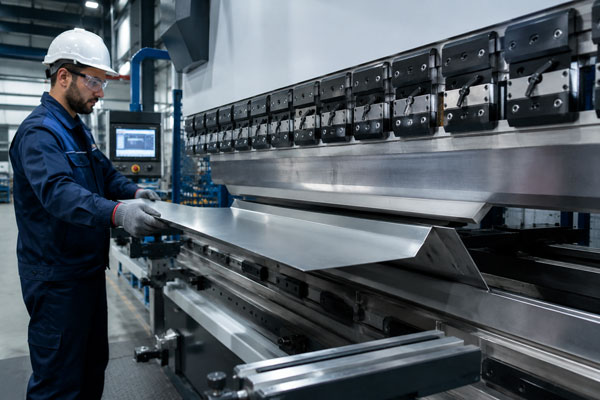
Role of Press Brake Machines in Metal Fabrication
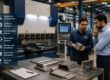
In modern manufacturing, metal fabrication is essential for creating everything from automotive components to industrial machinery. One of the most critical tools in this process is the press brake machine, which allows manufacturers to bend, shape, and form sheet metal with precision, speed, and consistency.
Press brake machines have revolutionized the way workshops operate, enabling the production of complex metal components while maintaining high accuracy and repeatable results. In this blog, we explore the role of press brake machines in metal fabrication, their advantages, types, applications, and best practices.
What Is a Press Brake Machine?
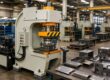
A press brake machine is a metalworking tool designed to bend sheet metal into desired angles and shapes. It consists of a die and punch system, where the punch presses the metal sheet into the die, forming it precisely.
Key Components:
- Frame: The structural support for the machine.
- Punch: Upper tool that applies pressure to bend the sheet.
- Die: Lower tool that determines the bending angle and shape.
- Back Gauge: Positions the metal sheet for accurate bends.
- Hydraulic or CNC Controls: For precise and automated bending operations.
Advantages of Using Press Brake Machines
Applications of Press Brake Machines
Automotive Industry
- Manufacturing body panels, brackets, and chassis components with precise bends.
Industrial Equipment
- Producing enclosures, frames, and machinery parts for heavy industries.
Construction & Architecture
- Bending steel beams, sheet metal panels, and decorative components for buildings.
Aerospace
- Creating lightweight and complex metal parts that meet strict tolerances.
Furniture & Appliances
- Fabricating cabinet panels, shelves, and appliance enclosures efficiently.
Types of Press Brake Machines
| Type | Features | Applications |
|---|---|---|
| Manual Press Brake | Hand-operated, simple, low cost | Small workshops, prototypes |
| Hydraulic Press Brake | High force, smooth operation, CNC optional | Medium to large-scale production |
| Electric Press Brake | Energy-efficient, fast response | Thin sheets, precision work |
| CNC Press Brake | Computer-controlled, automated bends | Mass production, complex shapes |
| Hybrid Press Brake | Combines hydraulic and electric systems | Versatile industrial applications |
How Press Brake Machines Work
Sheet Positioning: Metal sheet placed against back gauge for accurate placement.
Bending Operation: Punch presses sheet into die, forming the required angle.
Angle Measurement: Digital readouts or CNC systems ensure precise bends.
Multi-Bend Operations: Automated machines can perform sequential bends without repositioning.
Finishing: Remove any burrs or sharp edges for safe and smooth components.
Modern CNC press brakes allow programmed bend sequences, reducing errors and improving productivity.
Advantages Over Traditional Metal Bending
| Feature | Press Brake Machine | Manual Bending |
|---|---|---|
| Precision | High, micron-level | Low, inconsistent |
| Speed | Fast, automated | Slow |
| Complexity | Handles intricate bends | Limited to simple shapes |
| Material Handling | Thick sheets up to industrial standards | Manual effort, thinner sheets |
| Repeatability | High | Low, dependent on operator skill |
Observation: Press brake machines provide accuracy, speed, and repeatability, making them essential for modern metal fabrication.
FAQs About Press Brake Machines
Depending on the machine, they can bend sheets from 0.5 mm to several centimeters thick.
Yes, small CNC models are available, but manual or hydraulic press brakes are more cost-effective for low-volume fabrication.
Modern machines include light curtains, emergency stops, and protective guards to prevent accidents.
Routine inspection and lubrication should be done daily, with full calibration and hydraulic checks monthly.
Yes, CNC press brakes can perform multi-angle bends and compound shapes with high precision.
Conclusion
Press brake machines are transforming the metal fabrication industry by enabling precise, efficient, and versatile sheet metal bending. From automotive components to architectural panels, these machines allow manufacturers to achieve high-quality, repeatable results while reducing labor and material waste.
With modern CNC and hydraulic press brakes, workshops can increase productivity, maintain tight tolerances, and handle complex shapes, making press brakes an essential tool for industrial manufacturing and modern engineering.