




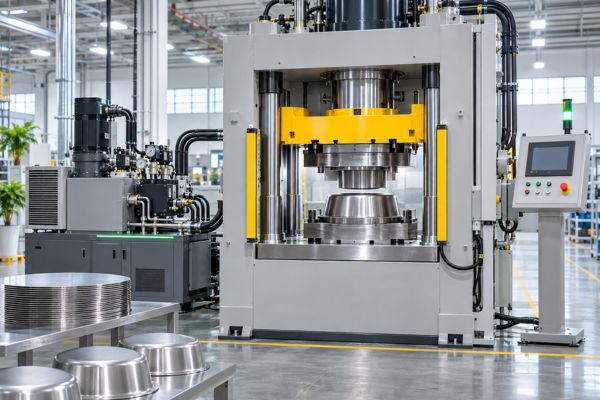
How Servo Hydraulics Can Reduce Energy Use in Deep Drawing
A hydraulic deep drawing press can use less electricity when pump output matches the changing demands of its production cycle. Servo hydraulic drives can reduce unnecessary energy use by controlling motor speed and hydraulic flow. Savings depend on machine design and operating conditions.
For kitchenware and automotive component factories, measure electricity consumption alongside output and quality. A press that consumes less power but produces fewer acceptable parts may offer little practical benefit.
When discussing requirements with a hydraulic deep drawing press manufacturer, ask how the proposed machine manages energy during forming, holding, return movement and waiting between cycles.
Why Motor Power Does Not Tell the Whole Story
The motor rating shows its power capability. It does not show how much electricity the complete press will consume during a working shift.
Deep drawing involves changing loads. The ram approaches the tool, forms the component, returns and waits for the next blank. Each stage has different power requirements.
Two machines with similar motor ratings can therefore have different energy consumption. Compare measured electricity use under the same production conditions, including any cooling equipment and material handling systems included in the assessment.
Where Can Energy Be Lost During Production
Energy losses can occur when a hydraulic system supplies more flow or pressure than the process needs. Depending on the circuit, excess energy becomes heat, increasing cooling requirements.
Production planning also matters. Unnecessary ram travel, avoidable waiting and poorly coordinated loading can increase the energy needed for each finished part.
Start by recording the actual cycle. Identify how long the press spends forming, returning, holding and waiting. This helps the manufacturer assess where a different drive arrangement or revised operating sequence could help.
How Do Servo Hydraulic Drives Improve Efficiency
A servo hydraulic system adjusts the motor and pump operation to suit the required movement and force. Matching supply to demand can reduce losses compared with a system that keeps supplying unnecessary hydraulic power.
Some designs also recover energy through the die cushion or during pressure reduction. Energy recovery requires suitable hydraulic and electrical arrangements; a servo motor alone does not provide this function.
Ask the manufacturer to identify the proposed drive type, control method and recovery features in the technical offer. Confirm which features are included before estimating the production benefit.
Why Measure Electricity per Accepted Component
Electricity per accepted component connects energy consumption with usable output. Divide the energy consumed during a defined production run by the number of parts that pass inspection.
For illustration, a trial using 20 kWh to produce 400 acceptable components consumes 0.05 kWh per accepted component. This example illustrates the calculation.
Count rejected parts separately. A lower electricity reading can be misleading if the trial also produces more scrap. Record the material grade, thickness, tooling, cycle time and inspection criteria so that another trial can be compared fairly.
Can Lower Energy Use Maintain Forming Quality
Energy improvements should preserve the conditions needed for consistent deep drawing. Changing drawing speed, holding force or lubrication without checking the result can affect material flow and component quality.
Keep the required dimensions, wall thickness and surface finish as acceptance criteria. Evaluate energy consumption only after confirming that the process produces acceptable parts.
A short trial may miss changes as the machine warms up. Agree on a representative test duration and inspect samples throughout the run, instead of checking only the first component.
What Should an Energy Performance Trial Include
Ask for a production trial that represents your intended working conditions. The test plan should define:
- The component drawing and material specification
- Tooling, lubrication and blank dimensions
- Required output and agreed quality limits
- The equipment covered by the electricity measurement
- Trial duration, waiting periods and rejection recording
Use the same measurement boundary when comparing proposals. Measuring one press alone and another with its cooling unit will produce an uneven comparison.
Request a written trial report with electricity consumption, acceptable output and operating settings. Use these records to evaluate the proposal.
Conclusion
An energy efficient press should deliver acceptable components with less unnecessary energy use across the production cycle. Compare measured results, confirmed equipment features and forming quality before ordering.
Presstech Machine India Pvt Ltd is based in Ahmedabad, Gujarat, India. Share your component drawing, production schedule and existing energy readings with the team to discuss a suitable hydraulic deep drawing press proposal. Request confirmation of available energy saving options and trial arrangements.
Frequently Asked Questions
Ask the manufacturer to assess servo hydraulics against your cycle, output and forming requirements. Request a comparison showing the proposed features and expected benefit under stated operating conditions.
Request measured kWh, trial duration, accepted output and rejection count. Confirm whether the reading includes cooling, feeding and other equipment needed during production.
Ask for a compatibility assessment covering tool dimensions, mounting, load requirements and ejection. Existing tooling can make the trial more representative when it suits the proposed machine.
No. Consumption depends on load, cycle duration, hydraulic efficiency and auxiliary equipment. Compare energy per accepted component while maintaining the required output and quality.
Possibly. A specialist must assess the pump, motor, valves, controls and machine condition. Request a feasibility study before committing to a drive conversion.
Include component quality, acceptable output, test conditions and an agreed energy measurement method. State any performance commitments clearly in the purchase documents.
Share drawings, material details, tooling information, shift hours and output targets. Include current cycle and electricity records when available, and ask which energy saving configurations can be offered.